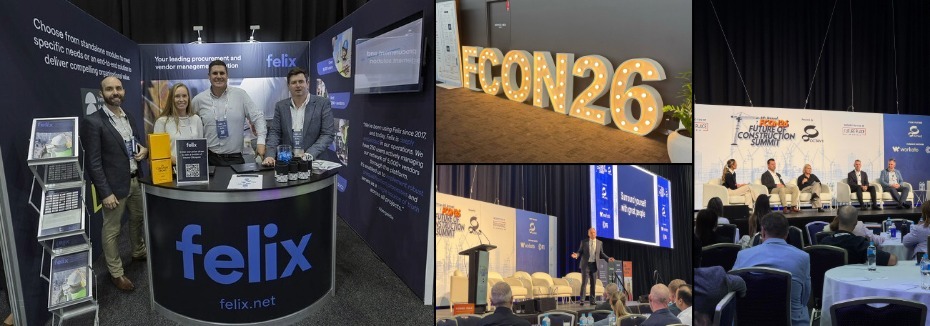
Last week I had the chance to attend FCON26 – the 6th annual Future of Construction Summit – held at the Royal International Convention Centre in Brisbane. Over two days, more than 1,000 construction industry professionals gathered to talk strategy, technology and the future of how Australia delivers.
Walking away, three themes stayed with me. They’re not new – but the way the industry is talking about them is different now.
1. The future of construction is about people
If there was one message that cut across almost every session, it was this: technology doesn’t build things, people do.
Mark Baker, CEO of BESIX Watpac delivered a keynote address with the kind of energy you don’t often see from someone at that level – genuine enthusiasm, clear pride in his team, and a refreshingly human view of leadership. His addressed touched on integrated capability, resilience through disruption, and what it means to lead an organisation through disruption. But underneath all of it was a consistent thread: infest in your people, build the right culture, and everything else follows.
This wasn’t just one speaker’s opinion. It came through in panel discussions, roundtable discussions, and in conversations surrounding the event. Diversity, mental health, inclusion, next-generation talent – these weren’t side topics. They were central to the conversation about what a high-performing construction industry actually looks like.
The message is simple but worth saying clearly: you can have the best technology stack in the world, but if you haven’t brought the people along with you, you’re not going to unlock its value.
2. Productivity is everyone’s problem – and everyone’s opportunity
Australia’s construction sector faces a productivity challenge that is well documented but stubbornly difficult to solve. Workforce shortages, rising costs, supply chain volatility, and fragmented project delivery all chip away at margins and timelines.
But the conversation kept coming back to people, too. How do you attract skilled workers? How do you retain them? How do you design workflows that don’t burn people out?
Productivity isn’t just an efficiency problem. It’s a culture, workforce, and systems problem. And the industry seems to be finally treating it that way.
3. AI has arrived – now the real work begins
Having attended previous FCONs, I’ve watched the AI conversation evolve in real-time. From a tone that was once future tense: AI is coming, we need to be prepared, to this year where the conversation was firmly in the present: AI is here, we need to use it well.
That’s meaningful change. The questions being asked on stage and in roundtables weren’t about whether to adopt AI – they were about governance, integration, data quality, and how to get teams to trust and use the tools they have been handed.
The consistent caveat though? Humans aren’t going anywhere. In fact, the quality of human judgement, context, and oversight is what determines whether AI delivers value or just generates noise. That framing – AI as an amplifier of human capability, not a replacement for it – came up again and again.
And one more thing: a Brisbane moment worth celebrating
Living in Brisbane, working for a company headquartered in Brisbane, and attending FCON in Brisbane – it’s fair to say I had a personal stake in one of the Day 1’s most anticipated sessions: an inside look at infrastructure delivery for the Brisbane 2032 Olympic and Paralympic games.
Simon Crooks, CEO of the Games Independent Infrastructure and Coordination Authority (GIICA) gave a compounding account of the scale of what lies ahead. The infrastructure investment required over the next six years stands at a sizeable $20 billion. He’s frequently asked whether Queensland will get it done. His answer, without hesitation: yes.
One stat that stuck with me, shared by Simon: before the Games announcement, around 30% of people globally knew where Brisbane was. That number is now 90%. For those of us who call this city home, that’s just not a fun fact - it’s a genuinely exciting time. The city is on a world stage – and our industry has a direct role in shaping what our legacy looks like.
It was a reminder that what the construction industry builds isn’t just infrastructure. It’s the backdrop to the moments that people remember for the rest of their lives.
At Felix, we’re proud to be a Brisbane-born company playing our part in that story. Our vendor management and procurement platform is already embedded across some of Australia’s most significant infrastructure projects – helping teams manage supply chains, remove risk, move faster. As Queensland gears up to deliver one of the largest infrastructure projects in its history, it feels like the right place to be.




.jpeg)