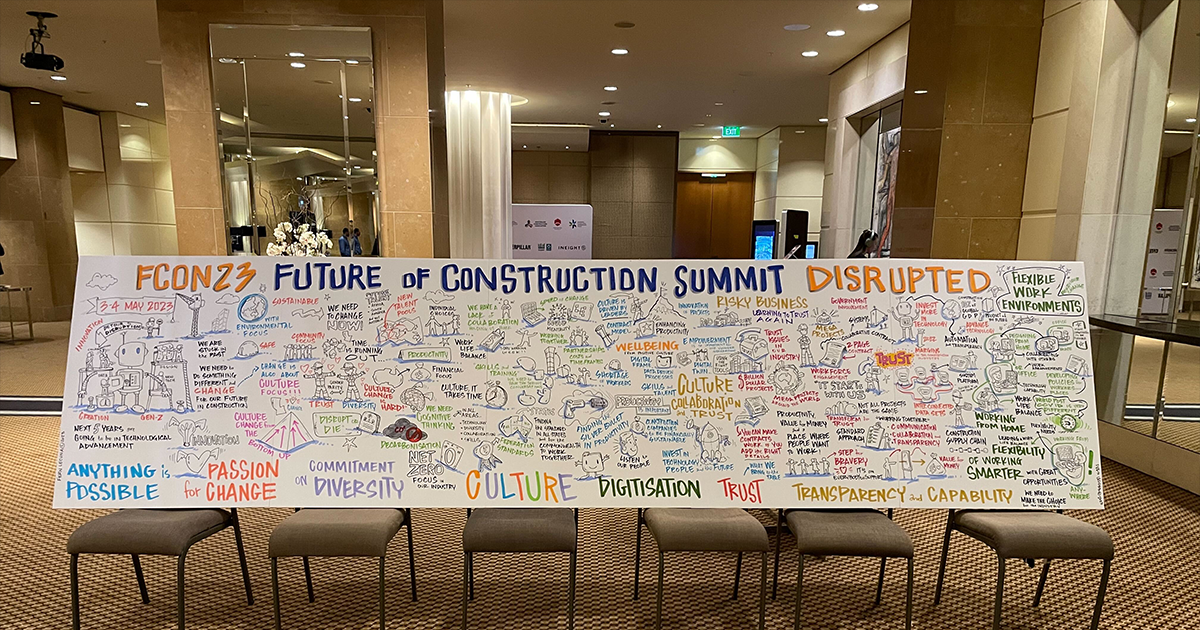
Felix wasn’t just hosting drinks at FCON 2023. Here’s an overview of the key takeaways on disruption that surfaced through the panels and workshops.
The overarching theme which emerged was that disruption is now a matter of sustainability. In the past, the motivation to disrupt was to improve productivity; now, the motivation is to stay afloat. Here’s how the construction industry must change.
Strategic partnered programmes
Industry collaboration in strategic partnered programmes will prevent projects from halting, deliver greater value, and catalyse innovation.
Strategic programmes will improve planning and communication between parties, preventing conflicts, spend insecurity and scheduling delays that stop projects from getting off the ground.
Collaborating and sharing information on activities like tendering, training and procurement will allow resources to be reallocated towards investments in people, systems, and innovation.
Strategic partners can multiply the speed at which they learn by sharing information and then rapidly receive returns by implementing learnings iteratively. Continuity is needed for R&D investments to bear fruit, and these collaborative programmes will provide the data and time required to learn - preventing ‘Eternal Beginner Syndrome’.
Attracting and retaining talent
The talent shortage is being felt industry-wide, not just by individual organisations. The construction industry needs to adapt to the changes in the global talent pool. Instead of competing for a shrinking pool of candidates, construction must focus on attracting and retaining new talent.
Industry bodies should work together to shift the public’s perception and make a career in construction appeal to a broader audience. The construction industry needs to create ways to measure diversity and inclusion, implement strategies to improve these metrics, and better communicate them to the public.
Constructors can improve their talent retention by actively investing in their own culture and people. An inclusive workplace and strong culture will give a diverse workforce more reason to stay. Alongside developing soft skills training, organisations shouldn’t lose sight of the new technical skills needed as the industry becomes more digital.
The road ahead
The industry needs to have ambitious goals but take small, quick steps to make sure that changes are permanent. Taking an iterative approach to change management will help break up large transformations into smaller initiatives to mitigate their complexity.
Creating collaboration and inclusivity initiatives through the whole value chain, defining measures to track their success, and then communicating these metrics will promote accountability, create lasting changes and deliver the sustainability that the industry needs.
Interested in digitising your procurement?
Felix’s modular procurement platform is designed for enterprises to make iterative improvements to procurement operations and enhance collaboration. Learn how you can better manage risk, increase productivity and reduce costs.
----
Want to see Felix in action? Feel free to request a demo here.



.jpeg)